September 2026
Six months ago, the informal settlement of Hay el Gharbeh, on the edge of Beirut, was in the middle of an evacuation zone. IDF airstrikes were hitting across Beirut’s suburbs as the latest conflict between Israel and Hezbollah was at its height.
The IDF evacuation orders gave the residents of Hay el Gharbeh just a few hours to pack up and try to find shelter elsewhere.
But most families living in Hay el Gharbeh are here because they have nowhere else to go – Syrian refugees with nothing left back home to return to, or marginalised Lebanese families unable to afford to live elsewhere.
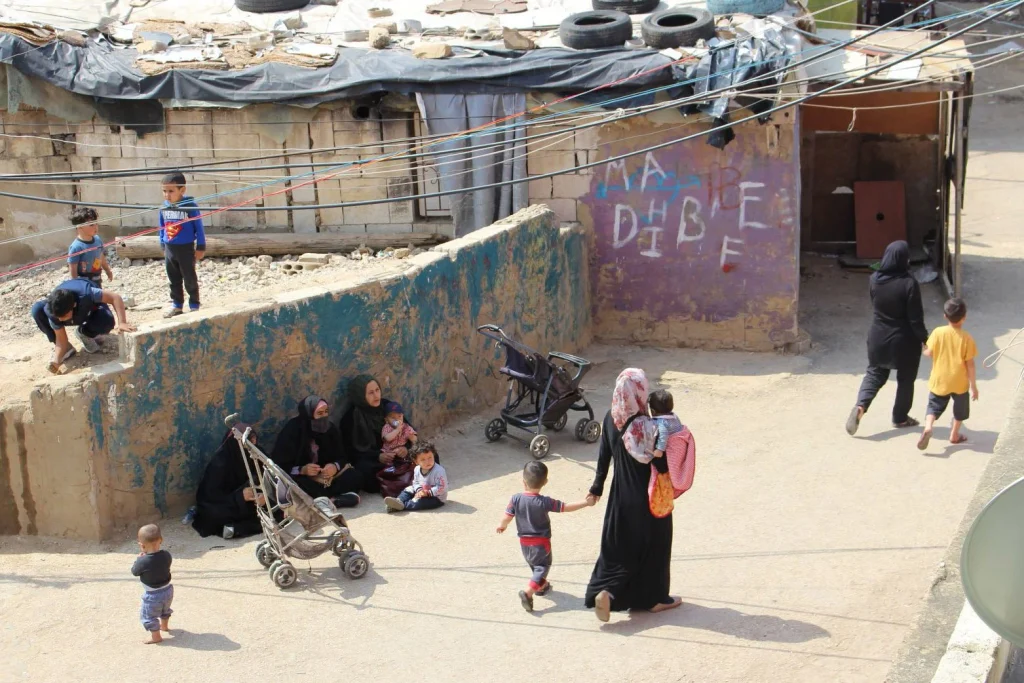
Hay el Gharbeh is an informal settlement on the edge of Beirut where most families live below the poverty line.
When you’re living with no savings, no safety net, even small snags can push you from ‘just getting by’ into prolonged crisis. So, the impact of war and displacement is catastrophic.
Today, although April’s ceasefire has meant that most of the residents who left have now returned, many are still struggling.
Children dropping out of school to help families make ends meet
Embrace partner Tahaddi provides a range of services for the community, including an education centre. Their staff tell us that they are seeing parents taking children out of lessons and sending them to work instead as they try to make ends meet. Others are moving from (already inadequate) housing into even more dangerous accommodation, as they can no longer afford rents.
Tahaddi tell us that, ‘rising costs of rent, food, and other crisis-related expenses are placing overwhelming financial pressure on already vulnerable households’.
As winter approaches, and temperatures begin to drop, the situation is only going to get worse.
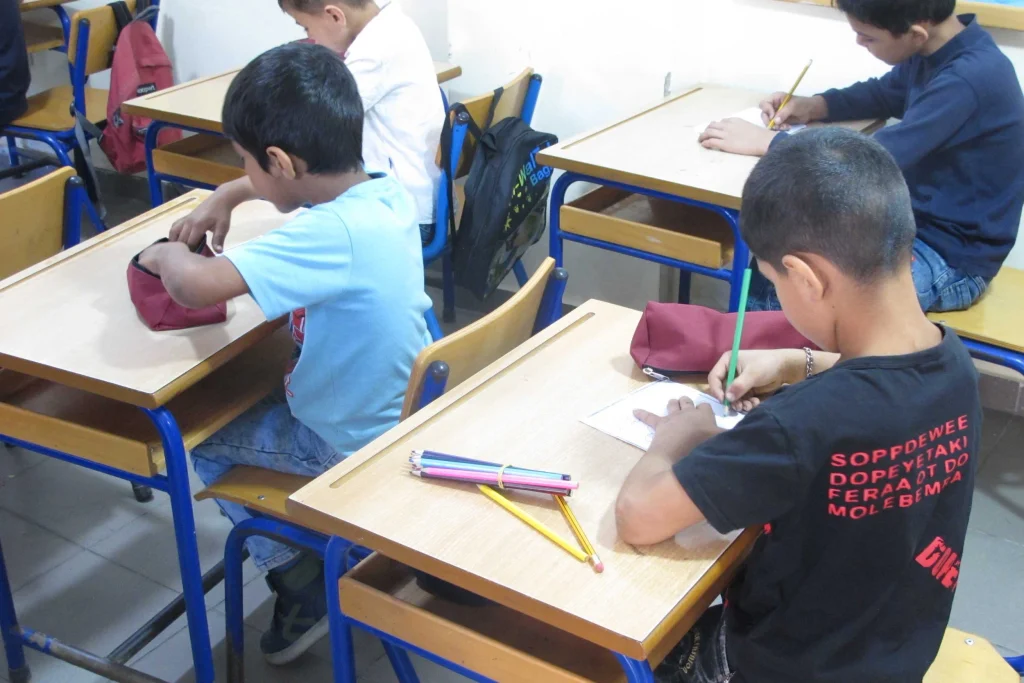
Staff at Tahaddi’s education centre say parents taking children out of lessons and sending them to work instead as families struggle to make ends meet.
Hundreds of thousands still unable to return home
For other families across Lebanon, returning home is not an option. The war has brought mass destruction of homes and infrastructure, particularly in the south. Conflict continues (despite the ceasefire) and over 300,000 remain displaced. Six percent of Lebanon’s land is still under Israeli occupation – what the Israeli authorities call a ‘buffer zone’ to protect their citizens in northern Israel from Hezbollah rockets.
The medical team from Tahaddi’s healthcare centre have been providing checkups and medications to families living in public shelters. For one of the team, the stark words of one patient still haunt him:
“All my life and money I spent to build my house in the South. It was for me and my children to have when they get married. Now it has all been destroyed: my crops, my gardens, probably my cats as well. Do you think I am worried about my health? About dying? I’m already dead.”
Tahaddi’s healthcare centre – providing free consultations and prescriptions
When budgets are stretched to breaking point, healthcare is often one of the first things families are forced to go without. If you need to choose between buying food for your children or paying for a medical test for yourself, there is no contest.
Although Tahaddi’s healthcare centre was forced to close briefly during the conflict, it is back open, offering free consultations, medications and help with hospital fees – meaning one less thing for families in Hay el Gharbeh to worry about.
Donations from Embrace supporters directly support the centre. Dr Dani gave us a tour.
Tahaddi’s atelier – producing warm blankets to help families through the winter
Tahaddi’s atelier has also reopened, providing employment and vocational training. Some of the items produced in their sewing room, including bags and decorative items, are sold for profit.
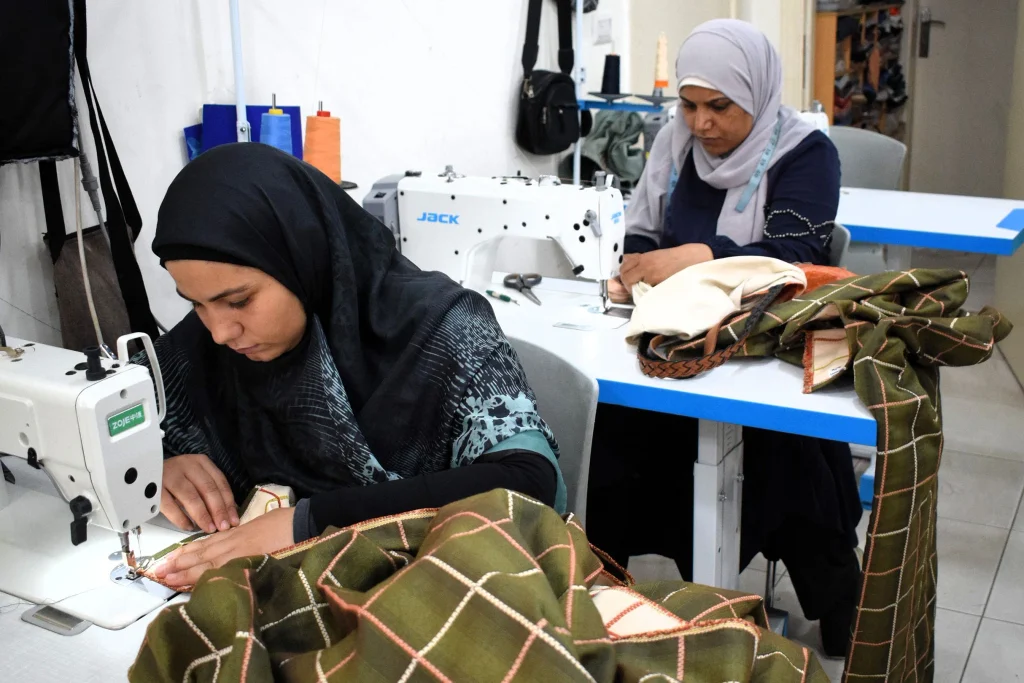
Tahaddi’s sewing atelier vital provides employment and vocational training for Hay el Gharbeh’s residents.
But the sewing team also produce blankets and bedding. Many are distributed free of charge to those in need – over 1,500 blankets have been given out by Tahaddi since May! Some blankets also go to our other partner MERATH as part of the winter supplies they distribute to displaced families in the Bekka Valley, where winter temperatures can dip down to below freezing. With so many families still displaced across Lebanon, these will be much-needed this winter.
Hear from some of Tahaddi’s team of skilled sewers:
Leave a Reply